Tenerife's washing machine engineers have a phrase for it: "Tenerife syndrome." Machines that should last 10–12 years are failing at 4–6. The element burns out, the drum seals scale over, the valve sticks. And when the engineer opens it up, it's white inside — coated in calcium deposits from water that measures up to 600mg/L in hardness minerals. The machine wasn't faulty. The water was.
What Happens Inside Your Washing Machine
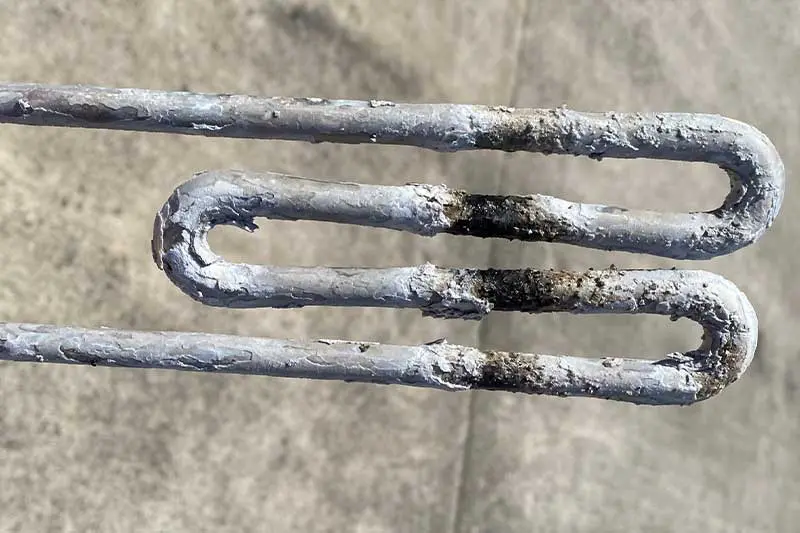
The heating element in a washing machine is the most vulnerable component. When hard water is heated, the calcium and magnesium dissolved in it precipitates out and bonds to hot surfaces — primarily the element itself.
This creates a calcium carbonate crust that:
- Acts as thermal insulation — the element has to get hotter to heat the same volume of water
- Increases energy consumption — some studies suggest up to 30% higher energy use in scaled machines
- Causes thermal stress on the element — it cycles between higher temperatures and fails earlier
- Spreads to valves, seals, and the drum — these harden, crack, and leak over time
The rate at which this happens scales directly with water hardness. In the UK, where water averages around 240mg/L, this is a slow process. In Tenerife South at 500–600mg/L, it happens more than twice as fast.
The Typical Timeline Without a Filter
Signs Your Machine Is Already Affected
Machine descaling products (like Calgon or citric acid washes) dissolve existing calcium deposits. They're useful maintenance. But they can't reach the interior of the heating element, they're abrasive on rubber seals over time, and the moment you stop using them — the scale starts rebuilding. As long as the hard water is reaching the machine, the problem continues.
The Only Permanent Fix
The only way to stop limescale building up in your washing machine is to prevent the calcium and magnesium from reaching it in the first place. That means a whole house water filter installed at the mains inlet — before the water reaches any appliance.
Our whole house filter system at €699 installs at the point where the water supply enters your property. Every tap, every appliance — washing machine, dishwasher, shower, boiler — receives filtered, scale-inhibited water from that point on.
Replace a washing machine every 5–6 years in Tenerife: €400–700 each time. Protect it with a whole house filter: €699 once. The filter pays for itself before the first machine replacement — and continues protecting every other appliance in the home simultaneously.
Frequently Asked Questions
My machine is already showing signs of limescale damage. Is it too late?
Will an under-sink filter protect my washing machine?
Does Calgon or similar products protect the element?
Protect Every Appliance — Permanently
One whole house filter at the mains inlet. Every washing machine wash, every dishwasher cycle, every shower — filtered, scale-free water. €699 installed.
Based in Tenerife South. We typically reply within the hour.