Most Tenerife expats arrive already suspicious of the tap water — and they're right to be. But the problem isn't bacteria. The water is safe to drink in that sense. The problem is mineral content. At 500–600mg/L TDS, Tenerife's water is so heavily mineralised it leaves white residue in your kettle, clogs your coffee machine, and genuinely tastes different from what you're used to in the UK. A reverse osmosis system fixes that completely — and for a lot less than most people expect.
What Is Reverse Osmosis?
Reverse osmosis (RO) is a multi-stage filtration process that forces water through a semi-permeable membrane with pores so small that virtually nothing passes through except water molecules. Minerals, heavy metals, chlorine, bacteria, nitrates — they're all rejected and flushed away.
The result is exceptionally pure water. Not distilled, not flavourless — our systems include a remineralisation cartridge that adds back the right balance of calcium and magnesium, so the water tastes clean and fresh rather than flat.
What Does Reverse Osmosis Remove?
In Tenerife's context, this is the important question. Here's what our RO system removes:
RO removes dissolved gases including some volatile organic compounds. It also slightly reduces beneficial minerals — which is why our remineralisation stage adds them back. The result isn't stripped water; it's balanced, clean water with the right mineral profile.
The Tenerife Numbers
Tenerife South water regularly tests at 500–600mg/L TDS. The WHO guideline for acceptable drinking water is 500mg/L — meaning Tenerife's water is either at or above that threshold year-round.
After our reverse osmosis system, the same water tests at 10–20mg/L. That's comparable to premium bottled water. Most customers notice the difference in the first glass — it tastes clean and neutral, with no chlorine aftertaste.
The average Tenerife household spending €15–20/month on bottled water saves €180–240 per year with an RO system. At €399 installed, it pays for itself in under 2 years — then it's free water for the life of the system.
What Reverse Osmosis Doesn't Do
One important limitation: a reverse osmosis system only filters the dedicated drinking water tap under your sink. It does not protect your washing machine, dishwasher, shower, or boiler. Unfiltered mains water still reaches those appliances.
If your main concern is drinking water and kitchen appliances (kettle and coffee machine filled from the filtered tap), RO is the right solution. If you want whole-home protection — every tap, every appliance — you need the whole house system.
- ✓ Removes chlorine & taste
- ✗ Doesn't remove limescale minerals
- ✗ TDS unchanged (~500mg/L)
- ✓ Simple under-sink install
- ✓ Removes 99.9% of contaminants
- ✓ TDS drops to under 20mg/L
- ✓ Dedicated filtered tap included
- ✓ Remineralisation included
Installation and Maintenance
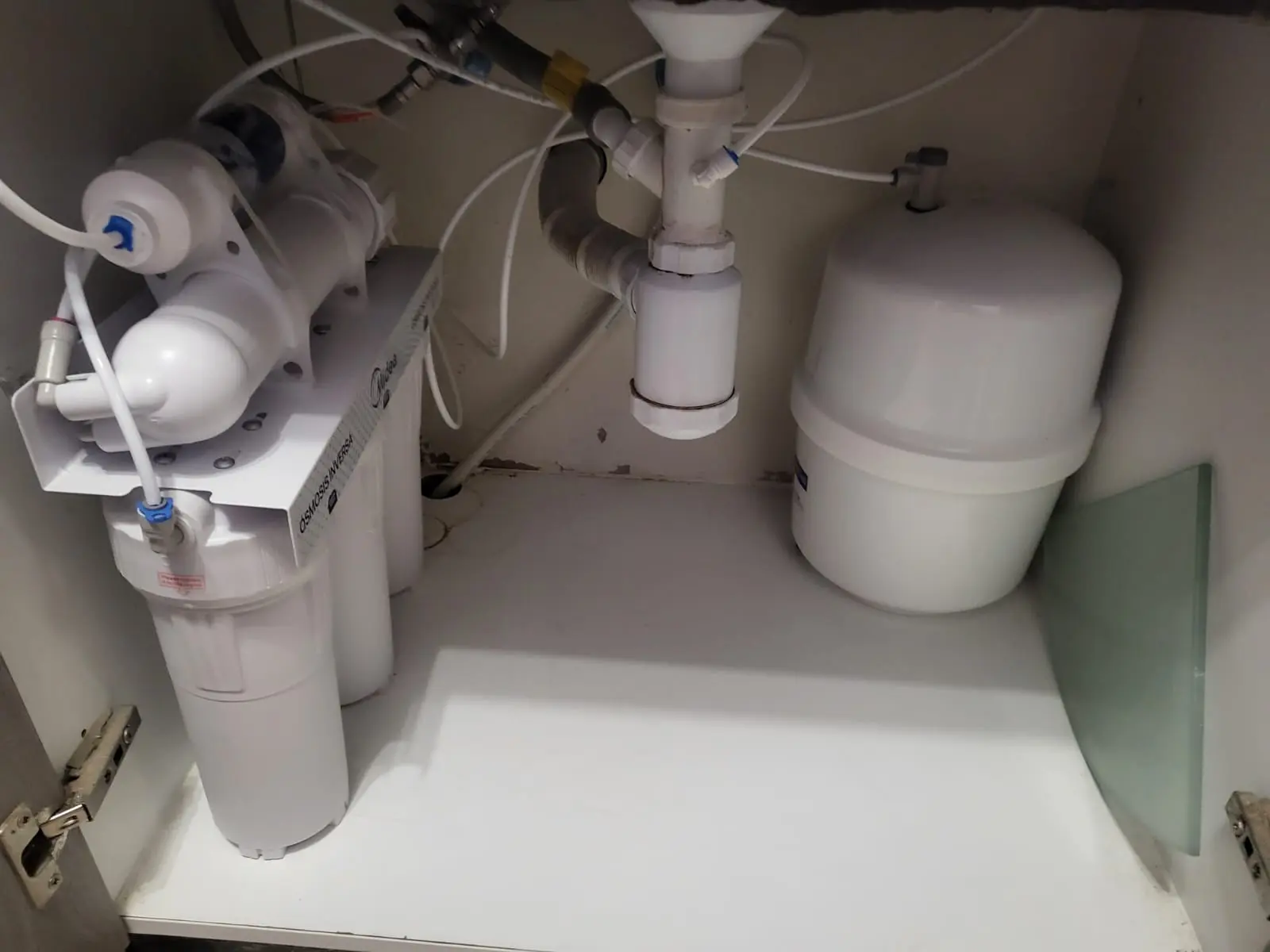
We install the system in a single visit, usually taking 1–2 hours. The unit fits inside a standard kitchen cupboard under the sink. We connect to the cold water supply and waste, and install a dedicated slim tap alongside your existing kitchen tap.
Filters need replacing once per year — a quick service visit we handle for you. The RO membrane itself typically lasts 2–3 years. We remind you when it's due.
System, dedicated tap, installation, and first year of filters. Annual servicing available. No subscription required. WhatsApp for a free quote →
Frequently Asked Questions
Is the water completely tasteless after RO filtration?
Will RO protect my washing machine from limescale?
How much water does reverse osmosis waste?
How long does the system take to produce water?
Pure Drinking Water from Your Kitchen Tap
€399 fully installed. No more bottled water. No more limescale in the kettle. Get a quote today and we can typically install within a couple of days.
Based in Tenerife South. We typically reply within the hour.