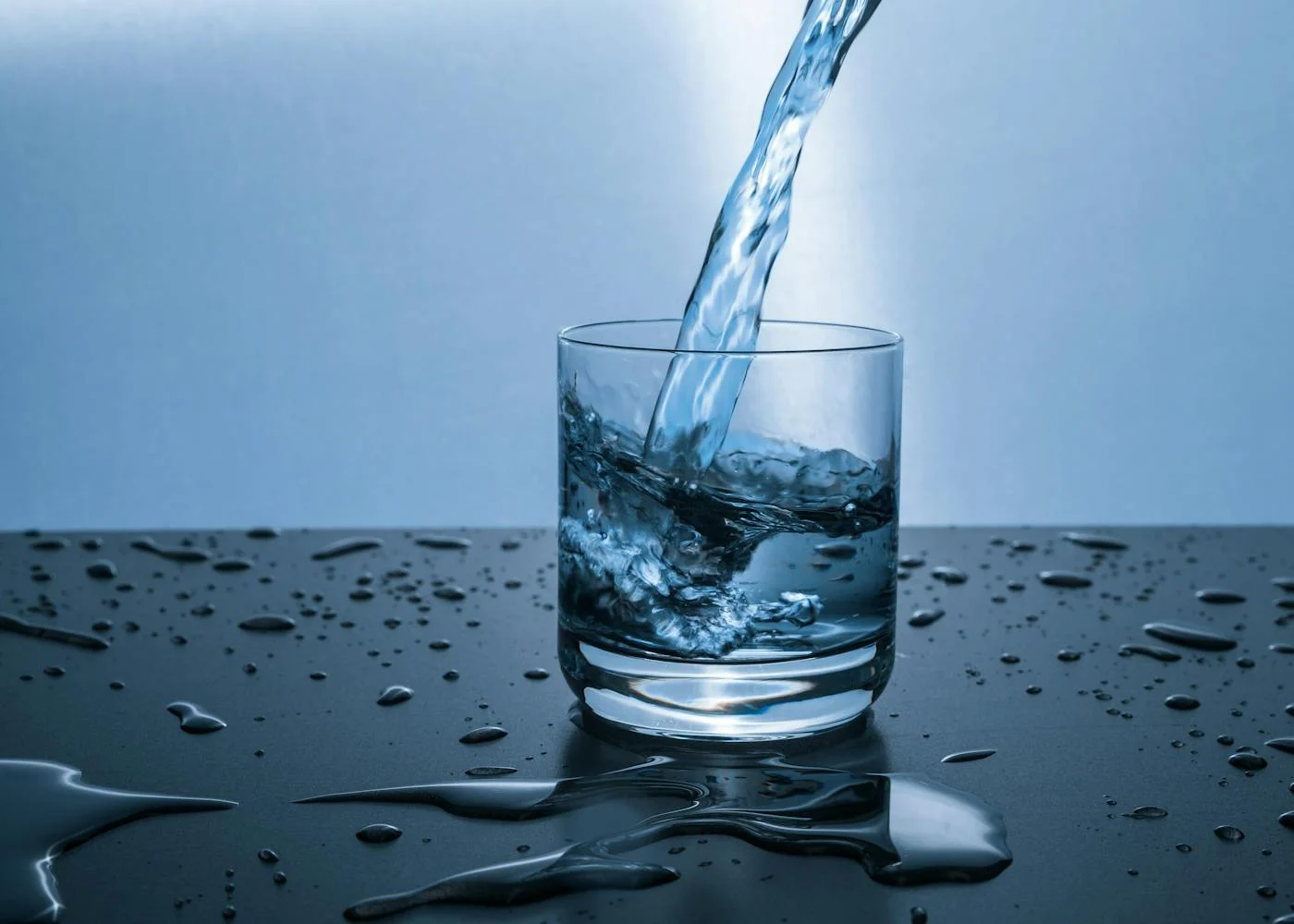
Is Tenerife Tap Water Safe to Drink? Yes — But Read This First.
Almost every expat asks this question in their first week. The short answer is yes. But the full answer explains why nearly everyone in Tenerife ends up buying bottled water anyway — and why the smart ones eventually stop.
💡
Tenerife tap water meets EU safety standards — but it's heavily chlorinated and has some of the highest mineral content in Europe. There's a better way.
A&M
Adam & Max
Co-Founders, Ultra Pure Water Tenerife
7 min read
Scroll
✅
Technically Safe
Meets EU drinking water standards
⚠️
Heavily Treated
High chlorine & mineral content
💧
A Better Option Exists
From €399 installed, once and done
When you move to Tenerife, someone will tell you not to drink the tap water. But they probably won't tell you why — or what the chlorine and minerals are actually doing to your kettle, your body, and your morning coffee. Here's the honest picture.
So Is It Actually Safe?
✓ The official answer
Yes — it's legally safe to drink.
Tenerife tap water is tested regularly and meets EU drinking water directives. You won't get sick from drinking it. The Spanish authorities — and the EU — consider it safe for drinking.
⚠ The full picture
But "safe" and "good" are very different things.
Safe means it won't harm you in the short term. It doesn't mean it tastes good, smells right, or is kind to your body, your appliances, or your wallet. Tenerife tap water is heavily chlorinated desalinated seawater — and once you understand what that means, you'll understand why nearly every long-term expat stops drinking it.
What's Actually in Tenerife Tap Water?
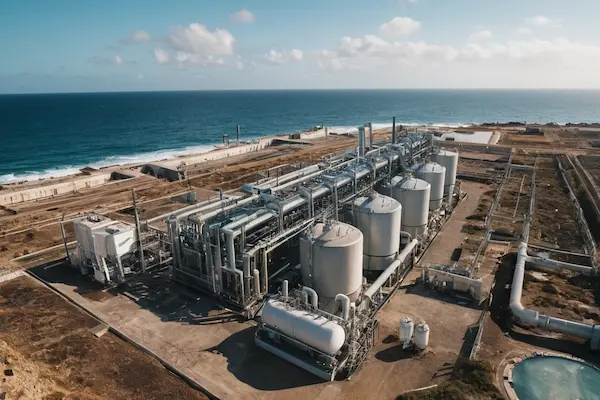
Unlike UK water, which comes from rivers and reservoirs, Tenerife has no rivers to speak of. The island's entire domestic water supply comes from industrial desalination plants — facilities that take seawater and remove the salt through a high-pressure membrane process called reverse osmosis. What comes out is then heavily treated with chlorine before it reaches your taps.
The desalination plant supplying Tenerife South — seawater in, mineralised tap water out. Every home in Costa Adeje, Los Cristianos and Arona is on this supply.
What you get is water that, while safe, carries a particular chemical profile that's very different from what most British expats grew up with:
What's in Tenerife Tap Water
Chlorine
Added for disinfection. Creates that distinctive swimming-pool smell and metallic aftertaste.
Residual trace from the seawater desalination process. More noticeable in taste than UK water.
Affects: Taste profile, relevant for very low-sodium diets
Moderate
Trihalomethanes (THMs)
By-products formed when chlorine reacts with organic matter in the water.
Affects: Long-term health (within legal limits, but present)
Within legal limit
Bacteria & Pathogens
Eliminated by the chlorination process. This is why the water is considered safe.
Affects: Immediate health — not a concern in treated supply
None detected
Why Does It Taste Like That?
If you've poured a glass of Tenerife tap water and immediately noticed something off — you're not imagining it. Here's what you're detecting:
🏊
The chlorine smell
The same compound used in swimming pools. It hits you as soon as you turn the tap on — especially first thing in the morning when water has been sitting in the pipes.
🪙
The metallic aftertaste
A combination of chlorine by-products and dissolved minerals. Particularly noticeable in tea — British expats often comment that their tea "just doesn't taste right" here.
🫧
The white residue
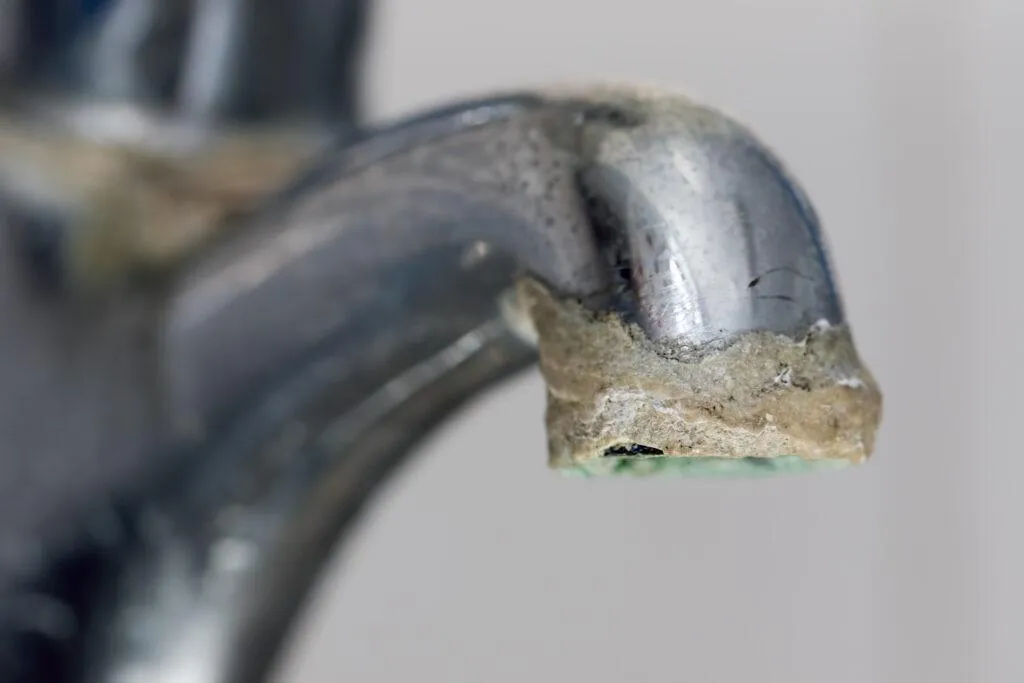
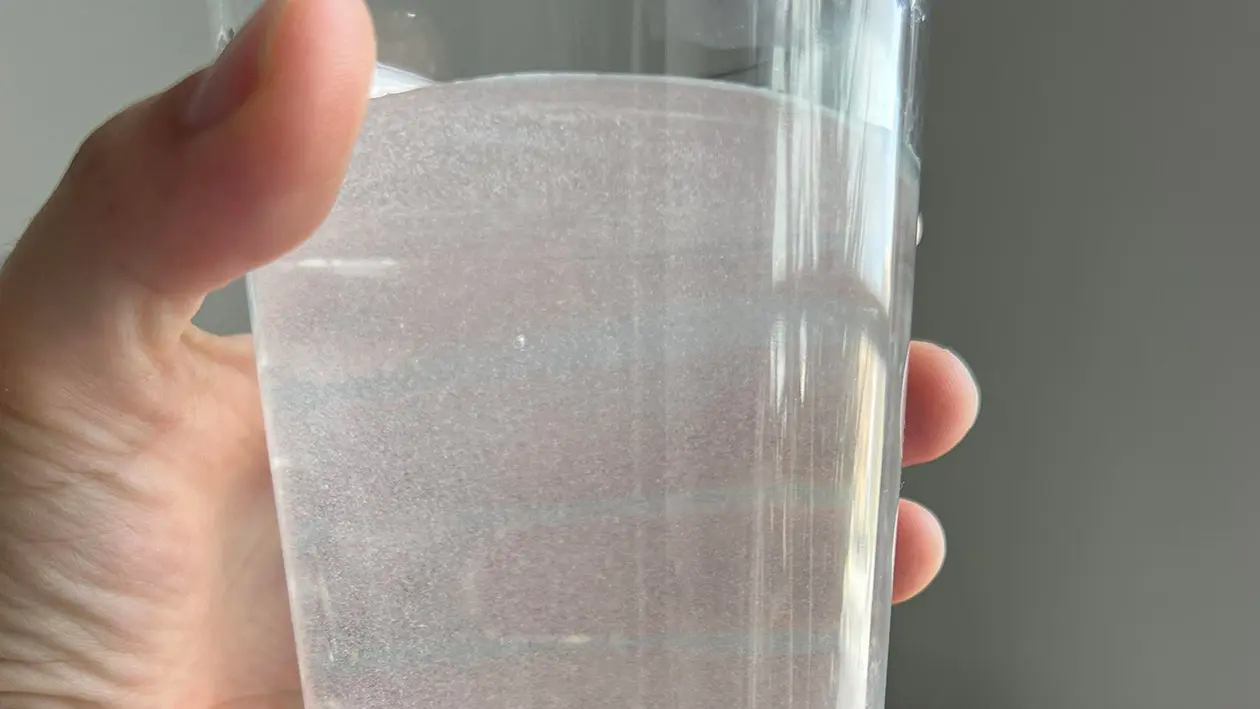
Leave a glass of tap water overnight and you'll often find a white ring where the water line was. That's pure limescale — the minerals left behind when the water evaporated.
☕
The flat coffee crema
Chlorine kills the delicate flavour compounds in coffee beans. Hard water also extracts minerals differently than soft water. Serious coffee drinkers notice the difference immediately.
That white crust around your tap and inside your kettle? Pure limescale — the minerals Tenerife water leaves behind on every surface it touches.
"I thought I'd bought a bad coffee machine. Three months later I realised it was the water — I hadn't made a decent coffee since I arrived."
— Dave, British expat, Los Cristianos (RO system installed 2024)
Tenerife tap water — technically safe, but that cloudiness and residue tells its own story.
💧
Ready to stop settling for bad water?
A reverse osmosis system removes 99.9% of what's in Tenerife tap water — chlorine, limescale, dissolved salts. Pure water on tap, in under 90 minutes. From €399 fully installed. WhatsApp us for a free quote →
The Bottled Water Trap
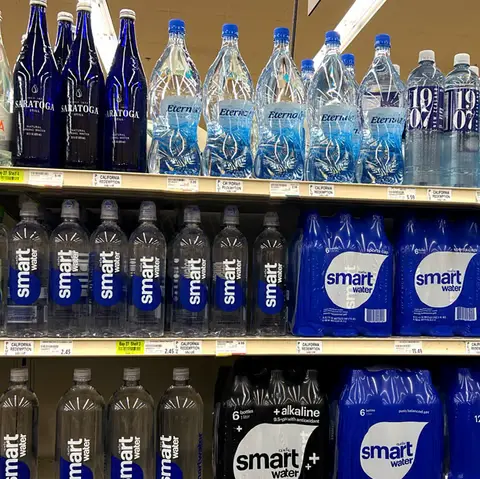
The most common response to Tenerife tap water is to just buy bottled. And it works — until you add up what it actually costs you, and think about where all those plastic bottles are going.
The average Tenerife household gets through 8–10 large bottles a week. It adds up faster than most people realise.
💸 The Real Cost of Bottled Water — Per Household Per Year
8 × 5L bottles per week (typical household)€480/yr
Supermarket trips to carry themTime + fuel
Plastic waste — 416 bottles per year416 bottles
10 years of bottled water€4,800+
vs. a reverse osmosis system€399 once
🌍
The environmental case is just as strong.
A household buying 8 bottles a week generates over 400 plastic bottles a year. Over five years that's 2,000 bottles — most of which end up in landfill or the ocean. A reverse osmosis system eliminates that entirely, producing pure water on demand from your tap.
The Smarter Solution
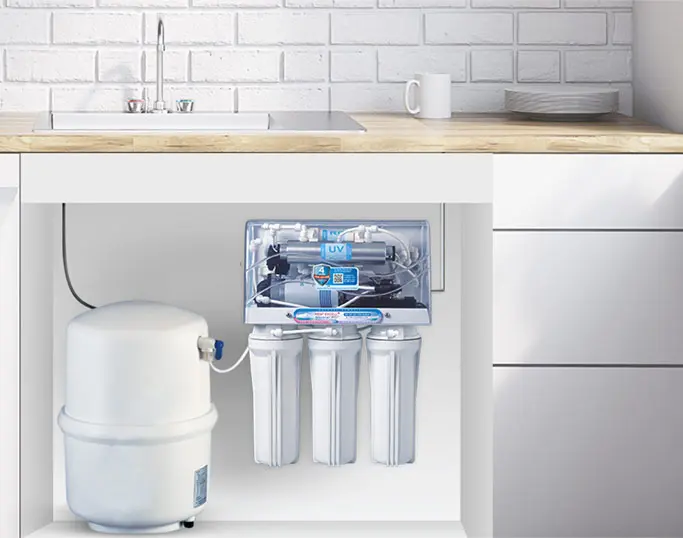
The good news: you don't have to choose between bad-tasting tap water and an endless supply of plastic bottles. A reverse osmosis system — installed under your kitchen sink — removes 99.9% of everything from Tenerife tap water, including chlorine, dissolved minerals, heavy metals and salts.
What comes out the other end is genuinely pure water, remineralised to a healthy balance, delivered through a dedicated tap alongside your existing kitchen tap. Your coffee tastes right. Your tea is transformed. And your kettle stops dying every six months.
A dedicated RO tap alongside the main kitchen tap — pure filtered water on demand, no more bottles.
Max's installations are clean, compact and hidden under the sink. Most customers forget it's even there — until they taste the difference.
🇬🇧
When we install, we test your water first.
We bring a TDS meter and show you exactly what's in your water before installation — and after. Watching the numbers drop is usually the moment people realise just how much was in there. You can measure the difference in seconds — before and after.
Common Questions
Can I cook with Tenerife tap water?
Yes — it's safe for cooking. Boiling also drives off chlorine, so the taste issue is less pronounced in cooked food. However, limescale will still build up in your pots and kettle over time. For pasta water, soups and hot drinks, a filtered system makes a noticeable difference to the final result.
Is the water safe for babies and young children?
Technically yes — it meets legal safety standards. However, many parents in Tenerife prefer to use filtered or bottled water for infants due to the high mineral content and chlorine levels. A reverse osmosis system with remineralisation cartridge produces water with a mineral balance closer to high-quality bottled water — and many of our customers installed their system specifically for this reason.
Does tap water affect my skin and hair in the shower?
Yes, and it's one of the most common things expats notice. Hard water strips natural oils from hair and skin, leaving hair feeling dull and dry, and skin feeling tight after showering. Chlorine strips colour-treated hair faster. A whole house system filters your shower water too — many customers tell us the difference in their hair within two weeks of installation.
Does filtered water taste noticeably different?
Completely. We've never met a customer who couldn't tell the difference after installation. The chlorine smell disappears entirely. The metallic aftertaste goes. Tea and coffee taste how they're supposed to. A number of customers have told us that for the first time since moving to Tenerife, their morning tea finally "tastes like home."
How does a reverse osmosis system work?
It pushes tap water through a semi-permeable membrane with pores so small that dissolved minerals, chlorine molecules, heavy metals and contaminants cannot pass through — only pure water molecules can. The reject water (carrying all the removed contaminants) is flushed to drain. The purified water passes through a remineralisation cartridge that adds back a healthy balance of calcium and magnesium before it reaches your tap.
No obligation · Same-day response · British team
Stop Buying Bottles. Start Drinking Better.
WhatsApp Adam and Max — we'll recommend the right system for your home and budget. Straight British advice, no hard sell.
Ultra Pure Water Tenerife · British expats, Costa Adeje
We moved to Tenerife and asked the same question. After installing our first reverse osmosis system and tasting the difference, we knew this was something every expat on the island needed to know about. 500 installations later, it's always the same reaction: "Why didn't I do this sooner?"